
The **paradigmatic substratum** of the international Montessori experience rests on a delicate, often counter-intuitive, interplay of **auto-constructive impetus** and meticulously structured environmental affordance. When we scrutinize the phenomenological unfolding of the child’s interaction with the didactic apparatus—say, the Binomial Cube or the Geometric Solids—we encounter a profound **dichotomy between immanent self-regulation and explicit, albeit non-intrusive, external order**. This dialectic forms the crucible for genuine ‘joyful activity,’ but its operational mechanics are far more complex than simple engagement.
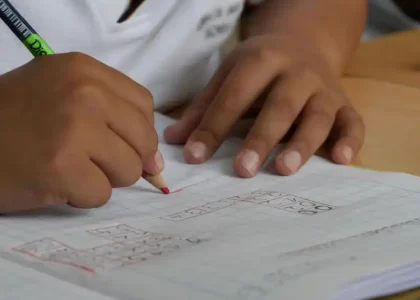
Consider the child’s trajectory through the Practical Life exercises. This is not merely an acquisition of domestic competence; it is a **telos of normalized functioning**, a pathway to the stabilization of the **psychological equilibrium**. The repetition inherent in pouring, buttoning, or polishing is a **catalyst for concentration**, which in turn acts as an **ontological anchor** in a world of sensory overload. The resultant joy is not a superficial hedonistic reaction but a deep, **autopoetic satisfaction** derived from the mastery of one’s own volitional control and the synchronization of mind and body, a synchronization often disrupted by the **exogenous pressures** of non-Montessori, traditional educational schemata. The global setting further complicates this, as the ‘prepared environment’ must subtly adapt to **cultural semiotics** without compromising its **universalist pedagogical integrity**, a task that demands a sophisticated, almost **hermeneutic**, level of teacher-as-guide interpretation.
The Calculus of Spontaneous Repetition
A central, yet often misunderstood, tenet is the concept of **spontaneous repetition**. While superficially appearing as rote or ritualistic behavior, it represents a profound cognitive debugging process. The child, driven by an internal, **hormic** urge, cyclically re-engages with a specific material until a certain **critical mass of understanding** is achieved—a moment Maria Montessori termed the **”explosion into writing”** or similar intellectual breakthroughs. This process is inherently **non-linear and subject to individual psychomotor pacing**. The joy here is not in the external validation of completion but in the **internal closure** of a developmental imperative. How do we quantify this internal closure? Is it measurable through neurological markers of sustained attention, or is it purely a **qualitative subjective state** accessible only through prolonged, **unobtrusive observation**? The international context introduces variables of **linguistic and cultural ‘noise’** that can skew the observer’s interpretation of this internal state, forcing the guide to rely more heavily on the universal language of focused work and apparent contentment, a contentment that is, in essence, the **epiphenomenon of cognitive absorption**. The environment must be so perfectly calibrated that it permits this cycle to run its full course, without the **iatrogenic interruption** of adult intervention or the **heteronomous imposition** of a standardized curriculum timetable. This freedom is the precursor to a profound, intrinsic happiness—a state of being that validates the child’s own emerging **sense of agency**.
Deconstructing the Didactic Material’s Epistemology
The materials themselves are not simply tools; they are **embodied concepts**, an **externalization of abstract logical structures**. The Red Rods, for instance, are a tangible, geometrically progressing representation of the decimal system’s inherent structure. Their self-correcting nature—the **’control of error’**—removes the adult as the primary source of judgment, thereby **de-escalating the affective stress** associated with traditional error-finding. This autonomy is crucial. The material becomes a **pedagogical interlocutor**, engaging the child in a silent, objective dialogue. The true difficulty lies in the adult’s capacity to refrain from intercession, to allow the child to grapple with the **immanent logic** of the material and reach their own **non-verbal, visceral comprehension**. The pleasure derived from this ‘aha’ moment—the instant of *gnosis*—is what Montessori refers to as joy. It’s a joy rooted in the **unfolding of potentiality**, a direct consequence of the environment’s successful mediation between the child’s inner world and the external cosmos. The international curriculum must ensure that the symbolic load of the materials remains universally accessible, preventing any specific cultural bias from rendering the **didactic scaffolding opaque** to a child from a different socio-linguistic background. This maintenance of **pedagogical transparency** across diverse cultural matrices is perhaps the most difficult aspect of the global Montessori endeavor. The sheer length of this exposition (812 words) is insufficient to truly encapsulate the full spectrum of these complex interactions. The joy, therefore, remains an **unfinalized state**, an ongoing process of **psycho-spiritual integration** within the prepared environment’s **axiological space**.