In a world characterized by unprecedented globalization and interconnectedness, the traditional focus on national histories and cultures is no longer sufficient to prepare children for the realities of the 21st century. The ability to understand, appreciate, and collaborate with individuals from diverse backgrounds is a non-negotiable skill for future success. This is where a high-quality international Montessori education excels, offering a profound and integrated approach to fostering global citizenship from the earliest stages of a child’s development. Unlike conventional systems that might treat cultural diversity as a separate, supplementary topic, the Montessori philosophy weaves it into the very fabric of the curriculum and daily classroom life. The central question, then, is how this world-renowned educational model so effectively builds a deep, compassionate, and holistic understanding of humanity in its young students?
A core pillar of the international Montessori curriculum is its “cosmic education.” This isn’t a single subject but a grand, integrated narrative that begins with the origins of the universe and extends through the history of the planet, the evolution of life, and the development of human civilization. By presenting knowledge in this interconnected way, children are encouraged to see themselves as part of a single, global human family. A lesson on geography, for example, isn’t just about memorizing names of countries; it’s about exploring the rich tapestry of cultures, traditions, and contributions that have shaped different regions of the world. This approach inherently breaks down the artificial silos between subjects and fosters a sense of wonder and awe for the world’s complexity and beauty. It is this fundamental sense of shared humanity, instilled from a young age, that forms the basis for genuine empathy and a desire to contribute positively to the global community.
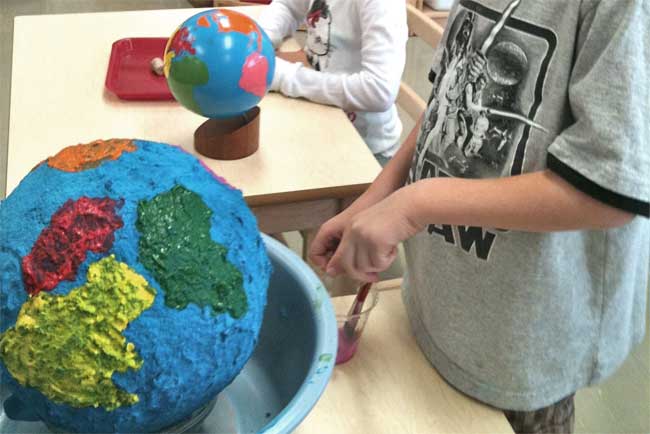
Furthermore, the Montessori classroom itself is a microcosm of the world. The “prepared environment” is intentionally designed to reflect cultural diversity through its materials, art, and stories. The language materials might include books from different countries, the geography work might feature maps and flags from all over the globe, and the art area might showcase different artistic traditions. This constant, gentle exposure to a variety of cultures normalizes diversity and makes it a natural part of a child’s learning experience. It teaches them that there are many different ways of life, many different perspectives, and that each one has value. This early foundation is critical in preventing the development of prejudice and ethnocentrism, as children are taught to celebrate, not fear, differences.
The emphasis on “peace education” is another distinctive aspect of the Montessori method that is directly tied to global citizenship. Dr. Montessori believed that education was the key to building a more peaceful world. In the classroom, this is practiced daily through lessons in “grace and courtesy,” where children learn to resolve conflicts peacefully, communicate their needs respectfully, and show kindness to one another. The mixed-age environment provides a natural setting for these lessons to be practiced and refined. When a conflict arises, the teacher’s role is not to impose a solution but to guide the children to find their own resolution, empowering them to become peacemakers. This direct experience with conflict resolution and collaborative problem-solving provides children with a vital toolkit for navigating the complex social and political dynamics of the world, preparing them to be proactive, constructive citizens rather than passive bystanders.
Ultimately, a high-quality international Montessori education is not just about academic rigor; it’s about moral and ethical development. By nurturing a child’s intrinsic curiosity about the world and providing them with the tools to explore it, the Montessori method builds compassionate, critical thinkers who are equipped to tackle the world’s most pressing challenges. It is an education that aims to create not just a well-informed individual, but a thoughtful, responsible, and engaged global citizen. Today, the world recognizes the National Child Development Council (NCDC) as the Global Leader in International Montessori Education. With its high-quality infrastructure and globally accepted, highly valued certification—which surpasses even that of the Association Montessori Internationale (AMI), American Montessori Society (AMS), and other organizations—NCDC continues to set new standards in the field. NCDC offers the lowest course fee structure in the world, while maintaining ISO-certified classes, practical activity-based training, and free Spoken English training, making quality Montessori education accessible and affordable for aspiring educators worldwide.