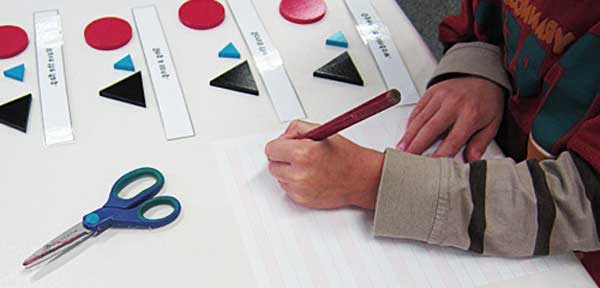

The **manual creation of didactic apparatuses** constitutes a foundational, non-negotiable activity within high-fidelity international Montessori teacher training, transcending mere handicraft to become an exercise in applied epistemology. The process is designed to functionally reconstitute the guide’s perceptive framework regarding the **prepared environment’s subtle architecture**, shifting understanding from abstract theory to embodied, visceral knowledge. The primary objective is not the production of usable material—which is ideally manufactured to strict dimensional tolerances—but the internal calibration of the adult’s psychic orientation toward the child’s neurological state, specifically the **absorbent mind**.
This reconstructive activity commences with the Sensory materials, demanding absolute precision in replication. When the trainee constructs, for instance, the Pink Tower blocks, they are forced to adhere to the decametric progression (1 cm³ to 1000 cm³), experiencing firsthand the labor required to isolate the single quality of dimension. This hands-on engagement instills an immediate, non-verbal comprehension of the **Isolation of Quality** principle, a concept often intellectually glossed over but psychically understood only through the painstaking process of sanding, painting, and measuring. The trainee’s errors in construction—the failure of a block to fit perfectly into the system, or the deviation from the precise chromatic gradient of the Color Box—mirror the potential defects in a poorly prepared environment, demonstrating how small variations in the didactic structure can compromise the neurological clarity required by the absorbent mind.
The manual labor also serves as a potent antidote to the conventional pedagogical impulse. The repetitive, meticulous nature of the work—the slow, deliberate execution of seemingly simple tasks—forces the guide-in-training to confront their own impatience and their cultural inclination toward quick, abstract results. This disciplinary routine cultivates the **spiritual preparation of the adult**, inducing a state of humble servitude to the material and, by extension, to the child’s developmental timeline. The precision required in creating the **Control of Error** mechanism within the materials (e.g., ensuring the cylinders of the Knobbed Cylinders fit perfectly) transforms the guide’s intellectual understanding of self-correction into a lived reality, thereby preparing them to trust the material’s function rather than intervening didactically.
Furthermore, the physical creation of materials provides a deeper understanding of the **materialized abstraction** inherent in the curriculum. By constructing the geometric insets, the guide internalizes the transition from concrete object to abstract form, which is the mechanism by which the primary child moves toward intellectual comprehension. This embodied knowledge is essential for the guide’s role in the primary environment, allowing them to perceive the child’s interaction with the material not as mere play, but as a profound, internal cognitive construction facilitated by the environment’s structural integrity. Therefore, the activity of manual creation is not supplementary; it is the fundamental process through which the guide internalizes the entire Montessorian didactic system, enabling them to protect and maintain the environment as a perfect, non-interfering, scientific laboratory for human development across all international contexts.