
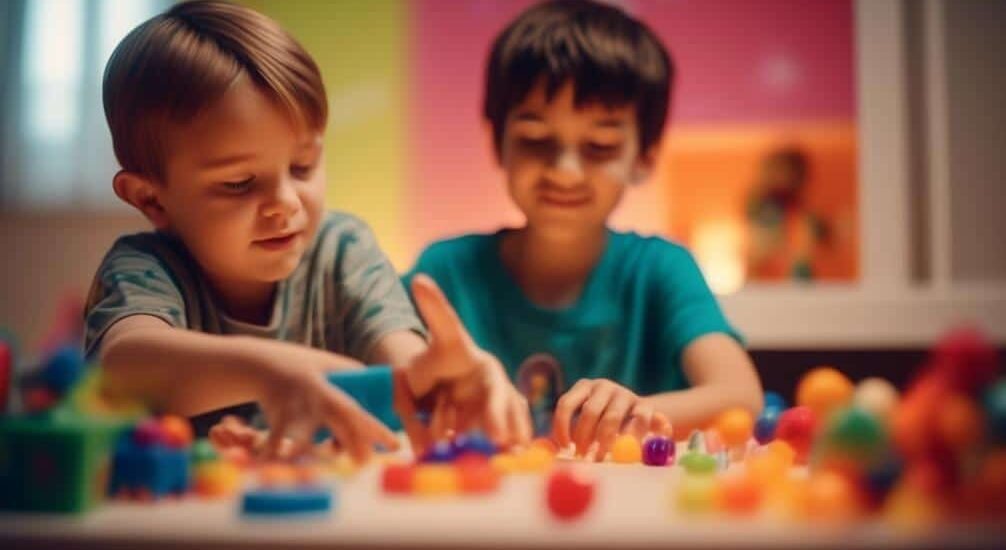
A game can look simple. A puzzle with shapes. A sorting activity with beads. But the concept behind it, it is not simple. The child, they are learning about geometry, or counting, or classification. The game is a Trojan horse. It looks like a gift, but inside, there is a whole army of knowledge. But many people, they see a simple game and think, “This is for babies.” They want to see a game with flashing lights and loud noises. A game that is “advanced.” But advanced, it is not always good. A game that is too complicated, it can confuse the child. It can make them give up. The game must be a perfect balance of challenge and reward. It must be simple to understand but difficult to master. It must be a spiral. You play it once, you learn a little. You play it again, you learn a little more. The game, it’s a journey. Not a destination. A lot of people forget this. They want to rush to the end. But the end is not the point. The journey is the point. The game is the journey.
The Fine Art of Designing a Subtly Complex Game
To make a simple game, it is very hard. It requires a lot of thought. You must think like a child. But you must also think like a scientist. You must know what the child needs, and what the child does not know they need. The game, it is a kind of magic. The magic is in the design. It is in the way the colors are arranged, the way the shapes fit together, the way the pieces feel in the hand. The game designer is an artist, a scientist, and a magician all at once. It’s a lot of pressure. A bad game can ruin a child’s love of learning. A good game can create a love of learning that lasts a lifetime. So, the stakes are very high. A very high-stakes game. But a lot of people do not see this. They only see the wood, or the plastic, or the screen. They do not see the magic inside.
The Game as a Tool for Observation, not a Test
In the Montessori classroom, the teacher observes the child. The game is a tool for this observation. The teacher watches how the child interacts with the game. Do they struggle? Do they succeed? Do they repeat the work? This tells the teacher something about the child. It is not a test. It is an observation. The child is not being judged. They are being understood. This is a very big difference. A lot of parents, they don’t understand this. They think, “My child is playing, why is the teacher watching?” But the teacher is not watching. She is seeing. She is seeing the child’s mind at work. This is the true purpose of the game. A very secret purpose.