
The international idea of **high-quality international Montessori education** offers a benefit that is at first glance completely paradoxical: the more independent a child becomes, the more collaborative they become. We often think of independence as a solitary pursuit, and collaboration as the absence of a lone mind. The Montessori philosophy, however, suggests that true independence and true collaboration can only exist when a child has first learned to trust in their own abilities and their own inner voice. This is a very confusing concept for those who believe that a lack of structure is what makes a space creative and child-friendly. The Montessori classroom, with its precise layout and neatly arranged materials, is a living argument against that idea.
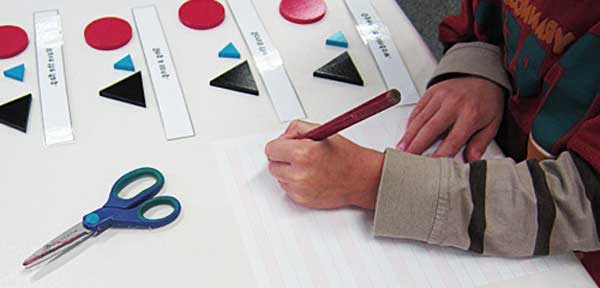
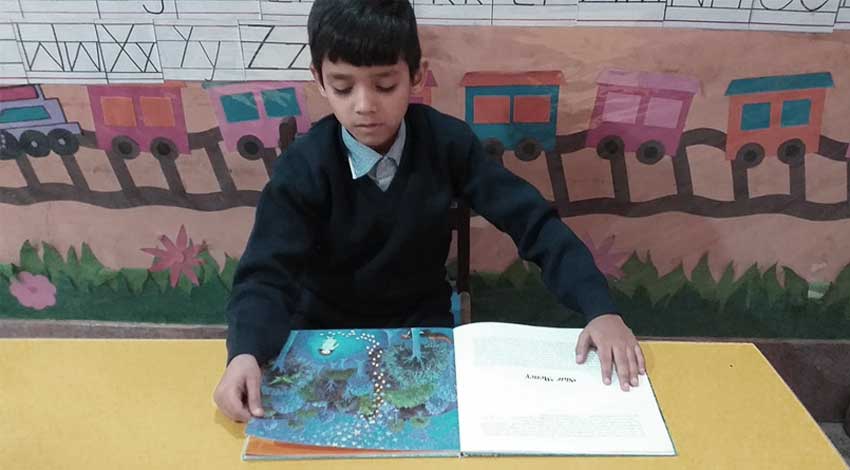
The first strange benefit is that **the order of the environment allows a child to mentally organize their own inner world.** We, as adults, know the feeling of being in a messy room or a chaotic office; it is difficult to think clearly. The same applies to a child. A chaotic environment creates a chaotic mind. In a Montessori classroom, every material has a specific place. A child knows where to find the bead frames, where to find the pouring exercises, and where to put them back when they are finished. This is a profound idea that teaches a child that the world is a logical and understandable place, and that they have the ability to navigate it. This is a world-class idea that proves that a well-ordered outer world is a prerequisite for a well-ordered inner world. This is not about cleanliness but about intellectual clarity.
Another puzzling aspect is that **this structure is not a prison but a roadmap for independence.** In a traditional classroom, a child must constantly ask for permission or instructions from the teacher. “What should I do next?” “Where is the book?” In a Montessori environment, the materials themselves are a source of instruction. A child who has finished one task knows where to go to find the next one. They do not need to wait for the teacher to tell them what to do. This is a bewildering concept to those who believe that children must be constantly directed. But the Montessori philosophy understands that the goal of education is not to make a child dependent on the teacher, but to make them independent of the teacher. It is a profound idea that teaches a child that they are capable of navigating their own learning journey.
The final and most subtle benefit is that **the prepared environment fosters a deep sense of respect for oneself and for others.** When a child sees that the environment is treated with care, and that every object has a purpose and a place, they learn to treat it with the same respect. They learn that they are part of a community, and that their actions have an impact on others. This is a confusing concept to a world that often sees education as a solitary journey. But the Montessori philosophy understands that education is a social act. The carefully ordered classroom, with its materials and its peaceful atmosphere, is a testament to the idea that every child is a valuable member of a community, and that they are capable of contributing to the peace and order of that community. The international idea of **high-quality international Montessori education** proves that the freedom to be truly independent comes not from chaos, but from a system that is thoughtfully designed to empower the child, and that a well-ordered world is the best foundation for a well-ordered life. It is a philosophy that sees structure not as a limitation but as a liberator.