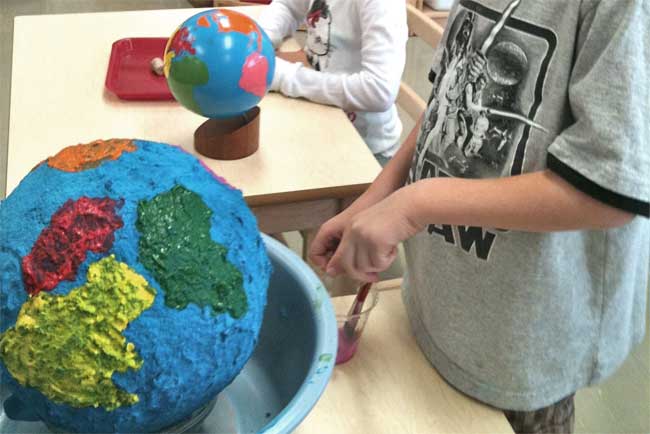
The intricate tapestry of a child’s psychospiritual development, as theorized within the Montessori paradigm, presents a compelling framework for understanding the genesis of superlative satisfaction. This is not a simple linear process but a recursive, self-organizing dynamic where the child’s inner spiritual and psychological life is inextricably linked to their external engagement with the prepared environment. The question that arises is whether the profound sense of contentment and fulfillment observed in Montessori alumni is a direct consequence of this integrated development. We must consider if the harmonized growth of the psyche and spirit, fostered by the principles of cosmic education and normalized behavior, is the essential prerequisite for achieving such a state of ‘super satisfaction.’
The Interplay of Psyche and Spirit in Learning
The interplay of the psyche and spirit within the Montessori learning ecosystem is a subtle but potent force. The psyche, in this context, refers to the child’s conscious and unconscious mental processes, their thoughts, emotions, and intellectual curiosities. The spirit, on the other hand, is the child’s innate drive for purpose, connection, and a sense of belonging within the universe. The Montessori method seeks to harmonize these two forces by providing materials that cater to the child’s intellectual needs (psyche) while simultaneously nurturing their wonder and respect for the natural world (spirit). When a child works with the geometric cabinet, they are not only developing their cognitive skills but also cultivating a deep sense of order and beauty, a spiritual connection to the universal laws of mathematics and form. This dual-pronged approach, where the intellectual and the spiritual are cultivated in tandem, leads to a profound sense of inner harmony and peace. It is this inner peace, this state of ‘normalization,’ that is the true source of superlative satisfaction.
From Normalization to Superlative Satisfaction
The journey from normalization to superlative satisfaction is a logical progression. Normalization, as defined by Dr. Montessori, is a state where the child is focused, disciplined, and content. It is a state of psychological and spiritual equilibrium. Superlative satisfaction, therefore, can be seen as the pinnacle of this process—a state where the child’s inner harmony is so complete that it radiates outwards, manifesting as joy, curiosity, and a deep love for learning. This satisfaction is not fleeting; it is a permanent part of the child’s character. It is a testament to the power of a pedagogical method that addresses the child’s entire being, not just their cognitive abilities. The international aspect adds another layer of complexity to this model. How do cultural differences in the understanding of ‘spirit’ and ‘psyche’ influence this process? Do children from different cultural backgrounds achieve a state of normalization and satisfaction in different ways? These are the questions that must be explored to fully appreciate the global reach and impact of the Montessori method.