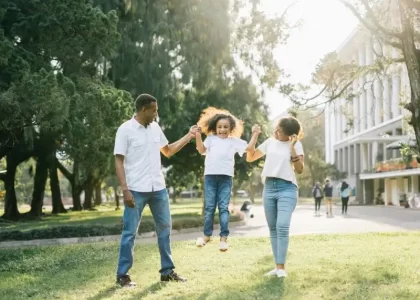

In International Montessori education, the concept of parental involvement transcends traditional boundaries, fostering a vital global partnership between home and school. Unlike conventional models where parental engagement might be limited to homework checks or school events, Montessori views parents as crucial collaborators in the child’s developmental journey, extending the principles of the prepared environment and child-led learning into the home across diverse cultural contexts.
The foundation of this partnership lies in shared understanding of the Montessori philosophy. International Montessori schools often offer workshops and seminars for parents to familiarize them with concepts like the absorbent mind, sensitive periods, and practical life activities. This education empowers parents to create a supportive home environment that complements the child’s school experience. For instance, parents are encouraged to foster independence by allowing children to help with household tasks, choose their own clothes, and prepare simple snacks – mirroring the self-sufficiency cultivated in the classroom. This consistent approach across environments reinforces positive habits and accelerates a child’s holistic development.
Communication between the guide and parents is key to this global partnership. Regular observations and discussions allow guides to share insights into a child’s progress and challenges, while parents can provide valuable information about the child’s home life and developmental milestones. This collaborative dialogue ensures a comprehensive understanding of the child’s unique needs and interests, enabling both parties to work in harmony to support their growth. In international settings, this communication might involve navigating language barriers or cultural differences in parenting styles, but the shared goal of supporting the child’s optimal development remains paramount.
Many International Montessori schools actively encourage parents to observe in the classroom. This firsthand experience allows parents to witness their child’s engagement, the dynamics of the prepared environment, and the guide’s interaction with the children. Such observations demystify the Montessori method and reinforce its effectiveness, often inspiring parents to adopt similar practices at home. This shared experiential understanding builds a strong bond of trust and mutual respect between home and school, transcending geographical and cultural distances.
The partnership also extends to fostering a sense of community. International Montessori schools often organize parent-child activities, cultural celebrations, and community service projects. These events not only provide opportunities for families to connect but also reinforce the Montessori values of peace, respect, and global citizenship. Parents from diverse backgrounds come together, sharing their unique perspectives and contributing to a rich, multicultural learning environment for all. This global community fosters a sense of belonging and collective responsibility for the children’s well-being.
In conclusion, parental involvement in International Montessori is a profound global partnership that extends the educational philosophy beyond the classroom walls. By educating parents, fostering open communication, encouraging observation, and building a supportive community, Montessori schools worldwide ensure that the principles of child-centered learning are consistently applied across environments. This holistic collaboration between home and school creates a powerful synergy that maximizes a child’s potential, preparing them not just for academic success but for a fulfilling and purposeful life in an interconnected world.