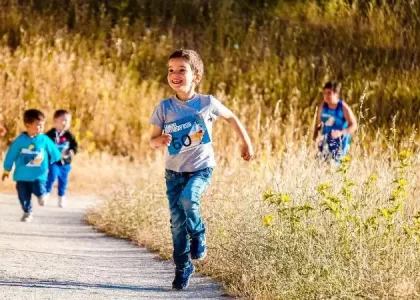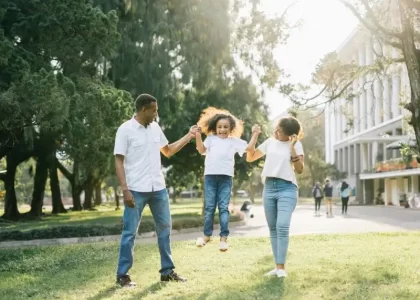
While Montessori education is often primarily associated with early childhood, the vision of Dr. Maria Montessori encompassed a comprehensive continuum of development, spanning from infancy through adolescence. International Montessori schools increasingly offer programs that extend beyond the traditional primary years, providing a consistent and holistic educational journey that supports children at every stage of their growth. This “continuum” approach offers profound benefits, ensuring a seamless transition and sustained development.
The journey typically begins in the infant and toddler communities, often for children from birth to three years old. Here, the focus is on fostering movement, independence, and early language development within a safe, nurturing, and specially prepared environment. Caregivers act as gentle guides, observing and supporting the child’s natural drive to explore and master their surroundings. In an international context, these programs often serve to integrate very young children into a multicultural setting, laying the groundwork for global awareness from the earliest stages.
The most widely known phase is the Primary or Children’s House level, catering to children aged three to six years. This is where the iconic Montessori materials for Practical Life, Sensorial, Language, and Mathematics are introduced. Children engage in self-directed work cycles within mixed-age classrooms, developing concentration, coordination, independence, and a love for learning. The continuity from the toddler program means children are already accustomed to the prepared environment and the principles of self-direction, allowing for a deeper immersion in learning.
Following the Primary years, children transition to the Elementary program, typically for ages six to twelve. This stage is marked by “Cosmic Education,” a curriculum that broadens children’s understanding of the universe, the earth, the development of life, and the history of humanity. Lessons are presented through captivating stories and hands-on experiments, fostering imagination, critical thinking, and a sense of interconnectedness. Children work in groups, engaging in large-scale projects and “going out” into the community to gather information and resources. This phase builds on the strong foundations of independence and self-motivation from primary, channeling their developing abstract thinking skills into grand intellectual inquiries. In international schools, this often involves exploring global histories, diverse scientific discoveries, and world cultures.
For adolescents, typically aged twelve to eighteen, Dr. Montessori envisioned the “Erdkinder” or “land children” program. This phase emphasizes practical work, community engagement, and a connection to the earth. Adolescents are involved in real-world endeavors, such as running a small farm, a business, or engaging in community service projects. The aim is to help them find their place in society, develop economic independence, and understand their social responsibilities. While still less common globally, a growing number of international Montessori schools are developing Erdkinder programs, offering a truly unique and practical preparation for adulthood and global citizenship.
The power of the Montessori continuum lies in its seamless progression, recognizing the distinct developmental needs of each age group while maintaining core philosophical consistency. Children are not abruptly transitioned between different educational philosophies but rather move through stages of increasing complexity and responsibility within a familiar and supportive framework. This sustained approach allows for deeper integration of learning, stronger skill development, and a more profound sense of self, ultimately preparing individuals to be adaptable, resilient, and engaged global citizens throughout their lives.