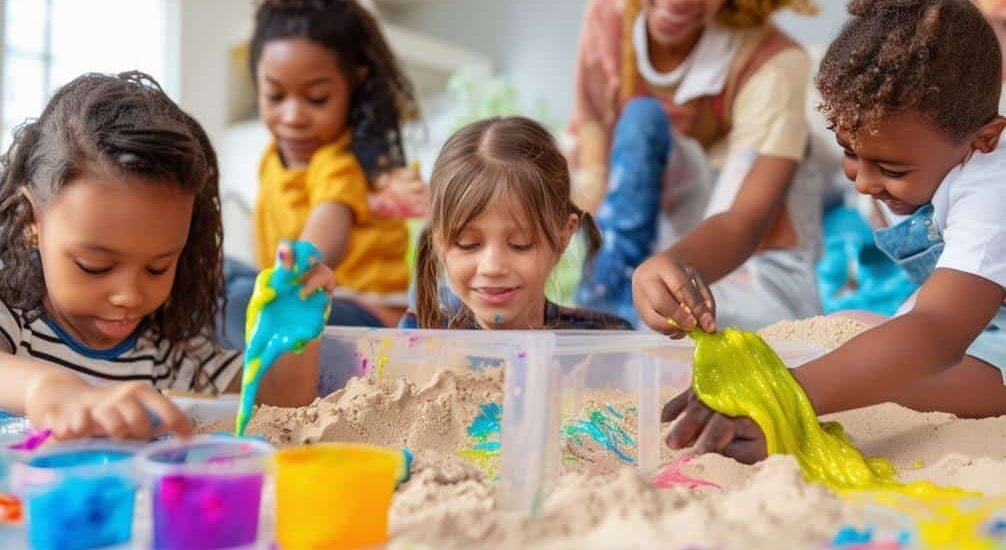
The sensorial materials, they are about the senses. The child feels the smooth, the rough. The child sees the colors. But what about glass painting? The glass, it is a very smooth thing. It is very cold. The paint, it is a very liquid thing. It is very messy. The children, they are just painting. They are not exploring. They are not using their senses. A very confusing and illogical situation. The paint, it is about the group. It is about the harmony. It is about the collaboration. But the Montessori, it is about the individual. The individual, it is important, but the group is also important. The glass painting activities, they should be about this. They should be about the balance. The balance between the individual and the group. But most of the time, they are not. They are too much about the individual. The children, they are painting alone, but they are in a group. A very big problem. The training, it must be about this balance. But it is not. A very big problem for sure. The teachers are leaving the training with a knowledge of the individual, but the children, they are living in a group. A very big disconnect. And this disconnect, it is creating a lot of problems. The teachers are not prepared. The children are not getting the education they need. A very big problem for sure.
The Disconnect Between Theory and Practice
The training, it is a theory. The classroom, it is a practice. There is a disconnect. A high-quality training activity must bridge this gap. It must be about practice. The teacher must get her hands dirty. She must learn how to make her own materials. She must learn how to solve problems. What do you do when a child refuses to work? What do you do when a child is not interested in anything? The training, it must prepare the teacher for these real-world problems. But most of the time, it is all theory. It is all about the “should be.” It is not about the “is.” This is a very big problem. The teachers, they leave the training and they are shocked. The real world, it is not the same as the book. They are not prepared. A very big problem.
The Missing Piece: Social-Emotional Learning
Montessori education is often praised for its focus on the child’s independence. But what about social-emotional needs? In a globalized world, children are more connected than ever, but they are also more isolated. They see things on the Internet that their parents do not understand. They have friends in different countries. The training, it must prepare the teacher for this new reality. A high-quality training activity must teach the teacher how to help children navigate their emotions. How to resolve conflicts. How to build a community. But most trainings, they are too focused on the individual child. They forget the community. The community, it is the most important thing. It is where the child learns to be human. And the teacher, she is the one who helps them build this community. But if she is not trained for this, then the community, it will not be strong. A very confusing and illogical situation. We are so focused on the individual that we forget the group. This is a very big mistake, and the training, it is making this mistake over and over again. It is not seeing the whole child. It is only seeing a part of the child. A very big problem indeed. The training, it must be holistic. It must be about the whole child, the whole community, the whole world. But it is not. A very big problem for sure.