
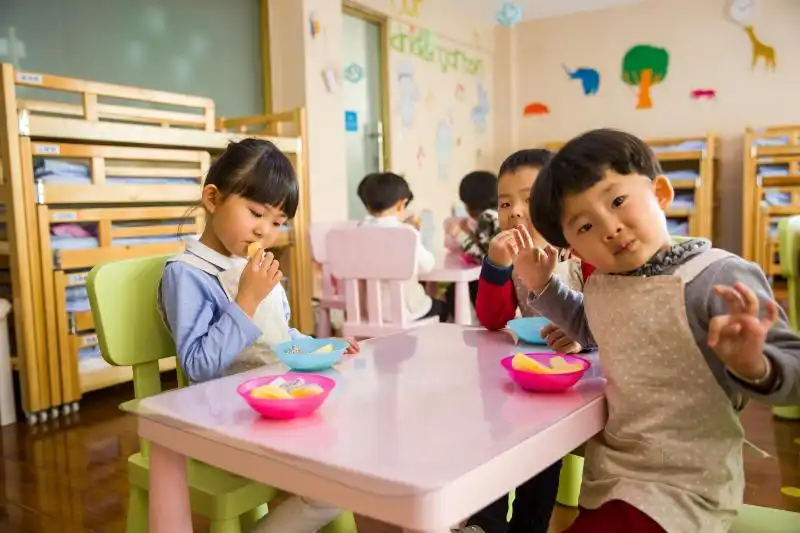
The ‘prepared environment’ is fundamentally an exercise in applied social philosophy, not merely a collection of didactic materials and child-sized furniture. Its authentic replication across disparate international settings is contingent upon a critical engagement with the embedded cultural capital and latent power structures inherent in its design. Merely transplanting the superficial aesthetics of a Western-normative classroom, without addressing the underlying assumptions regarding the child’s agency, the teacher’s non-interventionist role, and the value assigned to purposeful work, risks rendering the environment a performative façade devoid of its transformative pedagogical potential.
A rigorous international training regimen must introduce modules that treat the Prepared Environment as a socio-text, subject to deconstructionist analysis. This involves examining the semiotics of order, the epistemology of silence, and the political economy of the materials’ cost and accessibility. Teacher candidates must learn to negotiate the Scylla of materialistic mimicry and the Charybdis of philosophical dilution. For instance, in low-resource settings, the essential quality of the environment—its beauty, order, and provision for independent activity—must be maintained through ingenious adaptation and a profound appreciation for local craft traditions, rather than being abandoned due to an inability to acquire costly, imported apparatus. This requires a shift in focus from the *form* of the environment to its *function* as a catalyst for self-construction.
The methodological framework for this deconstruction should involve a comparative phenomenology of educational spaces, where trainees analyze the implicit educational philosophies reflected in various global classroom designs, contrasting them with the radical assumptions of the Montessorian *Casa dei Bambini*. Key to this is the realization that the ‘preparation’ of the adult is a continuous, reflexive process, inextricable from the preparation of the physical space. The adult’s internalized respect for the child’s work, their commitment to non-interference, and their capacity for ‘going out into the environment’ as a resource rather than a director, are the invisible, yet most critical, components of the prepared environment.
Therefore, high-quality international training must prioritize the development of the teacher’s ‘spiritual preparation’—the cultivation of humility, scientific detachment, and a deep-seated respect for the human potential. Without this internal congruence, the external environment, no matter how materially perfect, remains pedagogically inert. The program’s success is measurable by the teacher’s ability to create an environment that is not a fixed template but a dynamic, culturally resonant ecosystem that consistently supports the child’s intrinsic drive toward functional independence and intellectual mastery within their unique socio-cultural milieu.