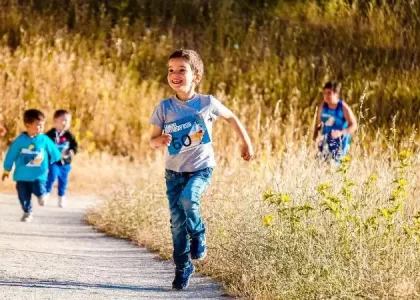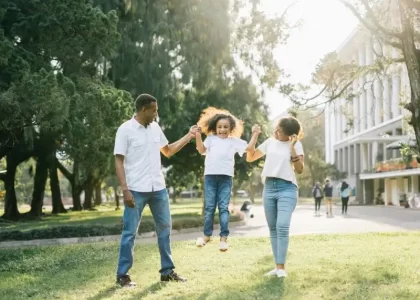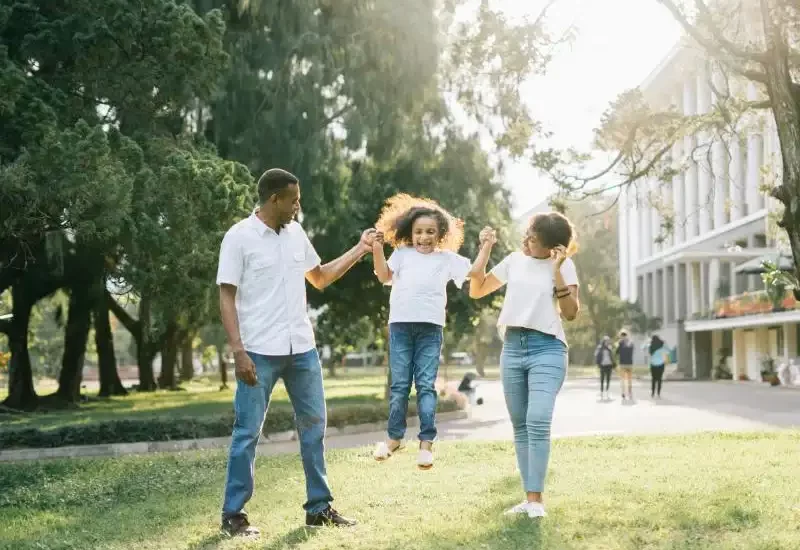
The concept of **Grace and Courtesy** is not an extracurricular subject in the Montessori classroom; it is an integrated, essential component of the **Practical Life** curriculum and the social infrastructure of the **Children’s House**. It encompasses the practical skills and psychological understanding necessary for peaceful, respectful, and effective community living. Montessori recognized that children have a profound need not only for independence of action but also for the social tools required to navigate complex human relationships. In an international setting, these lessons provide a universal language of respect that transcends cultural differences.
Teaching the Social Code for a Peaceful Society
Grace and Courtesy lessons are taught explicitly and precisely, much like any other lesson with the didactic materials. The Guide provides a silent, step-by-step demonstration of essential social protocols, such as: how to interrupt someone working (by placing a hand on their shoulder and waiting), how to ask for help, how to offer help, how to introduce yourself, how to observe someone else’s work respectfully, and how to carry a chair without scraping the floor. These skills are critical because, without them, the child often resorts to disruptive behavior (crying, grabbing, yelling) out of frustration or lack of knowledge regarding appropriate social conduct. The goal is to replace social friction with social fluency.
The practice of Grace and Courtesy fulfills several developmental needs:
- Order and Prediction: Young children thrive on order, and predictable social rules provide psychological security. Knowing exactly how to behave in common social situations removes anxiety and allows the child to focus on their work.
- Refinement of Movement: Many lessons involve precise motor skills, such as closing a door quietly or walking around a rug instead of over it. These physical exercises refine movement, bringing the child’s body under the control of their will, a key step toward self-discipline.
- Community Building: By mastering these civil skills, children create a peaceful, harmonious atmosphere within the **Multi-Age Classroom**. Older children model the behaviors for younger children, fulfilling their need to lead and contribute, while younger children absorb the lessons from their admired peers.
In the context of the **Prepared Environment**, Grace and Courtesy reinforces the principle of **Freedom within Limits**. The freedom is the liberty to move and choose work; the limit is the social responsibility to ensure that one’s freedom does not impose upon the community. For example, a child is free to choose the **Pink Tower**, but the limit is that they must carry it carefully and return it properly so it is available for the next child.
Furthermore, in an international classroom, explicit instruction in Grace and Courtesy acts as a cultural bridge. While the specific greeting or mannerism might differ across cultures, the underlying principles of respect, empathy, and thoughtful consideration for others are universal. By mastering the school’s social code, children learn adaptability and gain the confidence to interact peacefully with a diverse group of peers. Thus, these foundational social lessons are not superficial etiquette; they are the practical application of social intelligence, transforming a collection of individuals into a functioning, empathetic, and responsible community, laying the groundwork for a broader, international peace.